Table Of Content
- Italian Mediterranean Home
- Reasons to Move to San Marcos, CA, and Why You’ll Love Living There
- Defining elements and characteristics of Mediterranean interior design
- What is the difference between Spanish and Mediterranean design styles?
- Go Bold With Furniture
- Mediterranean Style Homes with Exterior Updates
In her current role, she explores everything from design trends and home tours to lifestyle product recommendations, including writing her monthly column, "What's in My Cart." DKOR Interiors' Ivonne Ronderos agrees, noting that clients are updating their homes to reflect how they live today. "In Florida, people are looking for a more contemporary style of living," Ronderos says. Most concrete block (CMU) homes have 2 x 4 or 2 x 6 exterior walls on the 2nd story.
Italian Mediterranean Home
When we think of Mediterranean style homes, we imagine embellished accents like patterned tiles, fountains, and wrought iron. When we overhauled this Mediterranean style house, we honed in on all of those elements (and then some). We replaced the stone near the small fountain by the stairway with patterned tiles and a bigger, black fountain that stands out against the tile. We also updated the iron railings on the balcony and stairs for a more modern appearance. When you think of most newer construction Mediterranean homes, you’re likely imagining the Modern Mediterranean style house.

Reasons to Move to San Marcos, CA, and Why You’ll Love Living There
Mediterranean Interior Design: Everything You Need to Know About This Colorful Coastal Style - Architectural Digest
Mediterranean Interior Design: Everything You Need to Know About This Colorful Coastal Style.
Posted: Wed, 08 Mar 2023 08:00:00 GMT [source]
Both styles evoke unique atmospheres, rooted in their respective heritages, offering distinct aesthetics that sometimes overlap because of their regional similarities. With warm-toned wood floors and beams, consider incorporating darker toned wood furniture to contrast freshly painted white walls. Sticking with neutral colors is key, but don’t forget to bring in complementary colors with decorative tiles and accent pieces. Consider embracing the warmth that comes with a Mediterranean home with a fireplace or outdoor fire pit to elevate your indoor-outdoor living space.
Defining elements and characteristics of Mediterranean interior design
We exemplified the style with intention throughout the design, from the mix of stucco and stone to the red tile roof and expansive outdoor living spaces. We also incorporated a variety of contemporary accents to maintain visual interest. Ronderos, who tends to work on Mediterranean homes with an outdated yellow tone, agrees. In addition to warming up the space with wood and natural materials, like stone and marble with geometric patterns, Ronderos relies keeps both paint and furnishings minimal.
As Andrews adds, due to the climate and geographic similarities between the Mediterranean region and the Golden State, the style is particularly popular there. However, as David explains, the aesthetic could work well in many places across the globe. Drawing inspiration from the Greek islands, the coasts of Spain, the rolling hills of Italy and even Morocco, Mediterranean design spans many territories. Named for the Mediterranean Sea, this design style is perfect for anyone who loves decor that's equal parts beauty and function. Touches such as tiled accents, stucco walls, ornate furniture, wooden arches, and exposed beams all lend a beautiful Mediterranean vibe to a home. The key design elements tap the seaside regions of the Mediterranean Sea, and our designers paid homage to the region with this transformation.
Texture and Soft Angles
Plus, you can add a few soothing pops of blue in your decor—or muted green on your island—so long as you remember the look is more about rustic coastal textures (instead of bold color). You'll be hard-pressed to find a Mediterranean-style home without patterned tile on the floors, walls, stairs, or other accents. You can use different patterns throughout the space, creating eye-catching variety. For example, your entryway floor might feature a Spanish-style mosaic theme, while your bathroom features traditional Moroccan-style tile accents. "Simplicity means nothing extra," Mark Williams and Niki Papadopoulos told Living Cozy.
Italian Renaissance (1890 -
We also accentuated the space with plants and ornate fixtures to compliment the stucco and red barrel tile roof. We added an outdoor fireplace with a lounge area, along with a dining table on the left, bringing functionality and comfort to the backyard. A Mediterranean house is a dream for someone who appreciates simple, yet elegant, spaces. "It's timeless and quintessential California," says Jute Home's Alison Davin, who is based in California. "If you want a house that is not trending and won't require updating—one with really warm woods, bright walls, and indoor-outdoor living—it's never really going to go out of style." Before you choose a color palette, it can help to decide if there's a particular style or region that you'd like to showcase in your Mediterranean decor.
Go Bold With Furniture
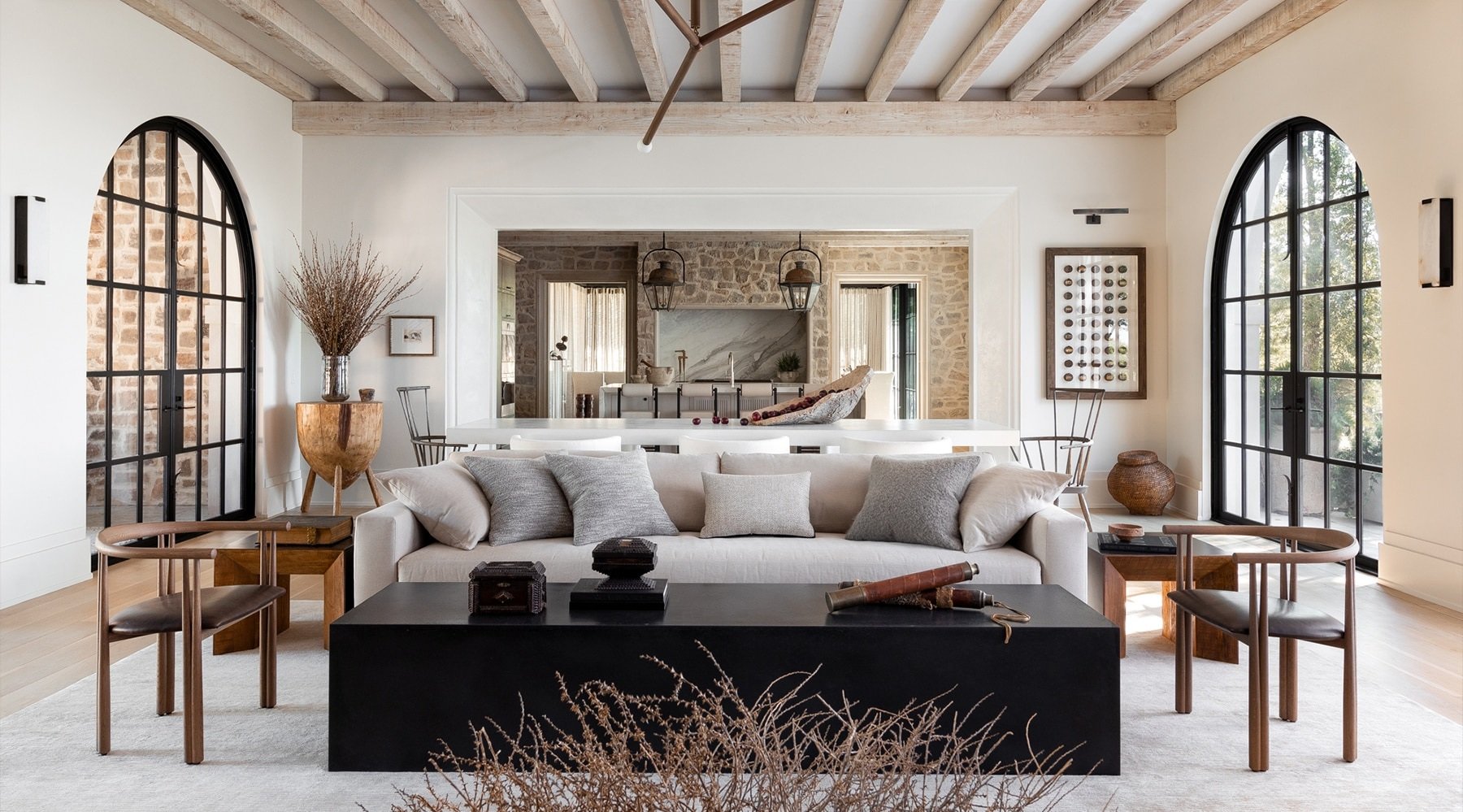
This seating area features a neutral colorway with white stucco walls, abstract artwork, sweeping archways, and a large, unobscured window. The textures and materials are natural, the accents are understated, and the walls are mostly unadorned. Notice how this space uses a nature-inspired colorway with natural materials and eye-catching foliage to create an outdoorsy aesthetic. In addition, the large windows let in bright light, making the space appear larger and more inviting. Mediterranean-style homes generally have an old-world look, but it's possible to apply the style in a modern way.
"The first thing that we do is brighten it up with a crisp white paint to finish," she says. "Once we get to the furniture, we rely on clean lines and neutral tones for the main pieces with a few pops of color in the art." Mediterranean decor often incorporates a minimalist-style sense of simplicity, similar to what you might see in a beautiful resort hotel room. Simple and sturdy furniture, bare windows, and neutral color palettes keep each space looking open, airy, and spacious.
We appreciate the curves and patterns above the doorways of this Mediterranean exterior, but they got lost among the trees. The unique shapes really shine around the entrance, so we painted it a darker shade to make it pop against the rest of the neutral exterior. Since Mediterranean style homes often feature balconies, we added one on the right side and added double doors covered with an awning. Naturally, it wouldn’t be Mediterranean style if you didn’t have a few coastal undertones. This is probably the main difference—Modern Mediterranean kitchens feature taupe or ecru undertones instead of ocher, caramel instead of burnt orange and honey instead of terracotta.
Mediterranean interior design is a design style inspired by the homes found throughout the Mediterranean region of Europe. As Andrews explains, it’s often linked to an aesthetic closely related to southern Spain, France, and Italy, though it is influenced by a host of countries that surround the Mediterranean Sea, including Greece, Malta, Morocco, and Monaco. “The Mediterranean region is known for indoor-outdoor living, which translates to airy, breezy interiors and a heavy use of natural materials with rich moments of color, texture, and eclectic tile work,” Suzie explains.
The exterior of Mediterranean homes typically feature a red-tiled roof (usually terra cotta), as well as brick or stucco that’s often painted white. Stone details, carved doors, and raw iron and metalwork on windows, over balconies, and front doors are other common features. Mediterranean style homes originated in the 1920s as part of the Roaring Twenties obsession with luxury, wealth, and leisurely lifestyles. This gave rise to many seaside resorts, which took inspiration from Mediterranean architecture.
Taking cues from Tuscan landscapes, this home exterior pairs limestone and stucco with over-grouted terra-cotta roof tiles to lend an authentic Italian look. However, a crisp exterior color palette and clean-lined windows with sleek black frames give this modern Mediterranean home a contemporary edge. Celebrate the colors and textures of Mediterranean-style homes with an inviting mix of aged patinas, lush landscaping, and open outdoor rooms. A medieval castle in Italy inspired the architecture of this made-to-look-old home. Rust-colored stucco siding, clay roof tiles, and an eye-catching arched entrance invoke countryside charm. This phenomenon can also be seen at other historic properties across various US coasts, although it’s particularly common in California.
The romantic architectural styles of Tuscany, Spanish Colonial and California Mediterranean have been the inspiration for many of William Hablinski’s most spectacular residences. The pros of a Mediterranean home lie in its unique qualities and building materials. With architectural details like exposed beams, tiles, and ironwork, you can design your home to draw attention to these features. If you’re living in California, these homes are suited for the warm weather with their stucco walls, leading to cooler inside temperatures.
To help identify some of these elements and gather Mediterranean decorating ideas, consider these projects from Lucas and Jeff Andrews Designs. Living in a warm location comes with its own set of design challenges, especially for a Mediterranean-style property. "If you're on a big piece of land in a warmer climate, like California, and you paint the house white, the staining of wood doors and windows doesn’t wear very well because of the sun, so we're using a lot of metal right now," Davin says. Basically, this is just a coastal version of Tuscan kitchens with an emphasis on the lighter, more airy Mediterranean Sea (as opposed to the deep and vibrant colors of the rolling hills). It uses the same foundational design as Tuscan—just with lighter, sleeker materials. This bathroom features tile on every visible surface except the ceiling, demonstrating a wide variety in just one space.
White walls, beamed ceilings, and eclectic tiles are all common in Mediterranean homes, like that of Jeff Andrews, pictured here. "We create intimate spaces—like a built-in fire pit that feels really cozy or a canopy over a dining area—so it feels more like a destination versus one big, expansive space," Davin says. When it comes to decorating a Mediterranean-style house, an understated look is best. "Because it is so pared down, we try to keep the decorating really symmetrical," she says. A blend of Spanish and Italian architecture, Mediterranean homes are dominant in warm-weather locations like California and Florida, which also have Spanish influences. Popular architects at the time were Addison Mizner, who advanced this home style in Florida, along with Bertram Goodhue, Sumner Spaulding, and Paul Williams in California.


No comments:
Post a Comment